
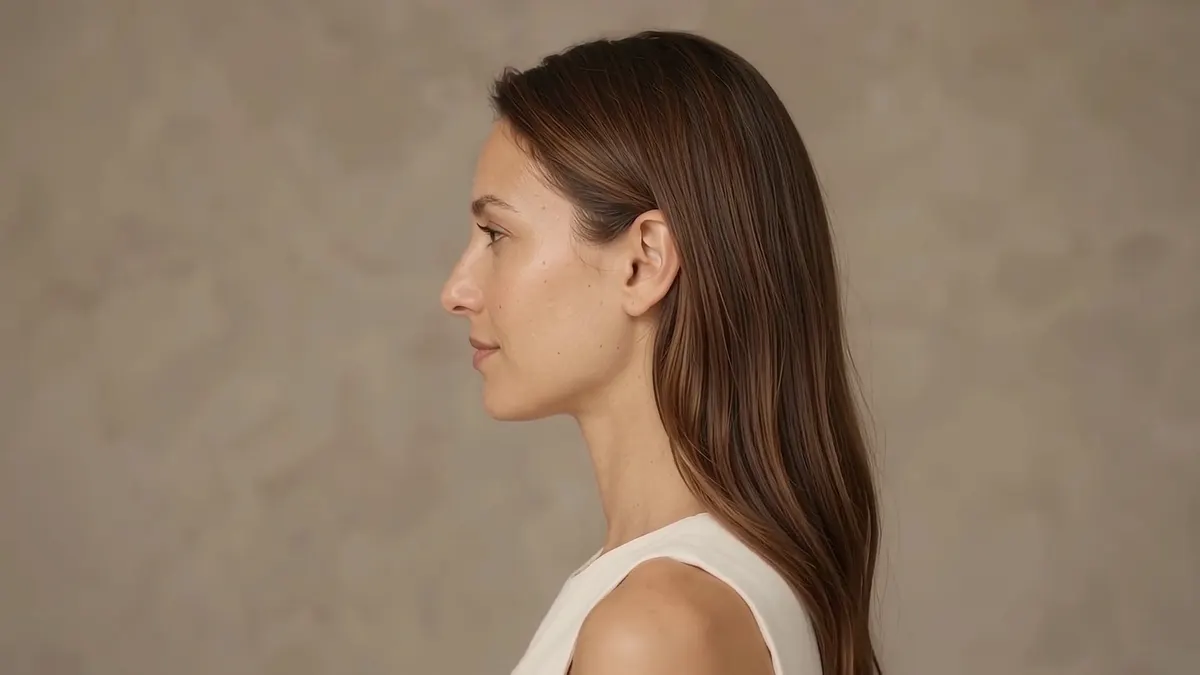
Facial surgery covers distinct procedures for the nose, the eyelids, the jawline and neck, the ears, the chin or facial volume. Dr Thomas Colson will assess these requests in Lyon; only a consultation can identify a suitable option.
What is facial surgery?
Facial surgery brings together several procedures that act on the shape, the volume or the laxity of different anatomical areas: the nose, the eyelids, the jawline and neck, the ears or the chin. A transfer of autologous fat may also be offered for certain losses of volume. These procedures do not meet the same need and share neither the same technique, nor the same recovery, nor the same risks.
Dr Thomas Colson will see patients in Lyon who wish to have a request for aesthetic facial surgery assessed. Some requests combine a concern about appearance with a functional problem, for example with breathing. Whether the indication is aesthetic, functional or reconstructive can only be determined after a clinical examination.
In this section
- Rhinoplasty
Rhinoplasty changes the shape of the nose and, where needed, improves nasal breathing. Preservation, structural and ultrasonic techniques, the operation, recovery, risks, written quote and cooling-off period: Dr Thomas Colson will perform rhinoplasty in Lyon.
- Blepharoplasty
Blepharoplasty addresses excess skin or fat bags of the upper eyelids, the lower eyelids or both. Dr Thomas Colson will assess these requests in Lyon after examining the eyelids, the eyebrows and the ocular surface.
- Facelift
A face and neck lift addresses certain forms of laxity in the cheeks, jawline and neck. Depending on the indication, repositioning involves the skin or the deep tissues, beneath the SMAS. Dr Thomas Colson will assess these requests in Lyon.
- Otoplasty
Otoplasty reshapes one or both ears when their projection, folds or asymmetry cause concern. Dr Thomas Colson will assess these requests in Lyon, in adults and in minors who are able to take part in the decision.
- Genioplasty
Genioplasty, or mentoplasty, changes the shape or position of the chin. Dr Thomas Colson will assess facial balance, the bite and the possible options in Lyon before any indication is given.
- Facial fat grafting
Facial fat grafting transfers the patient's own fat to restore certain volumes. Dr Thomas Colson will assess these requests in Lyon before any indication is given.
Which procedure corresponds to each area of the face?
The name of a procedure depends first on the area examined and on the aim discussed with the patient. This page offers guidance to help you find your way; the techniques, recovery and risks specific to each operation are set out on the dedicated pages.
Rhinoplasty: shape of the nose and possible breathing difficulty
Rhinoplasty changes the morphology of the nose. The assessment covers the external shape, the proportions of the face, any history of trauma or surgery and, where present, nasal breathing difficulty. An aesthetic request and a nasal obstruction do not necessarily call for the same procedure or fall under the same framework for cover.
Blepharoplasty: excess skin or bags of the eyelids
Blepharoplasty concerns the upper eyelids, the lower eyelids or both, depending on the indication. It can treat excess skin or fat bags, but it does not on its own correct every cause of a tired look, dark circles or visual discomfort. An ophthalmological symptom has to be distinguished from an aesthetic request.
Face and neck lift: laxity of the jawline and neck
The face and neck lift is intended for certain forms of laxity of the cheeks, jawline and neck. Depending on the indication, repositioning may involve the skin alone or the deep tissues of the face, beneath the SMAS; neither approach suits everyone. Skin quality, the distribution of volume, medical history and expectations all contribute to the choice of operation.
Otoplasty: shape or projection of the outer ear
Otoplasty reshapes the cartilage of the outer ear when one or both ears are considered too prominent, asymmetrical or insufficiently folded. The indication can be assessed in an adult or in a minor; in the latter case, the child’s maturity, the child’s own request and the consent of their legal representatives must be addressed in a suitably adapted consultation.
Genioplasty: position and projection of the chin
Genioplasty, also called mentoplasty, changes the shape or position of the chin. The analysis is not limited to the profile: it takes into account the proportions of the face and, if necessary, the dental bite. An abnormality of the bite or of the jaws may lead to a request for an orthodontic or maxillofacial assessment before isolated chin surgery is considered.
Facial fat grafting: restoring certain volumes
Facial fat grafting (lipofilling) transfers the patient’s own fat after it has been harvested from another area. It can be assessed when a loss or lack of volume is part of the request. It is a surgical procedure, different from a facelift and from an injection of filler; how well the fat graft takes and how it evolves remain variable.
How does the consultation determine the suitable procedure?
The consultation starts from the patient’s request, not from the prior choice of a technique. Dr Thomas Colson compares the stated aim with the findings of the examination, the medical history and the individual risks. This process may lead to a surgical proposal, to a different referral, to additional time for reflection or to the absence of any indication for surgery.
Understanding the request and examining the face
The examination clarifies the area concerned, the asymmetries present before any procedure, the quality of the skin, the mobility of the tissues and the proportions of the face. Depending on the request, it may also cover nasal breathing, the eyelids, the dental bite or the after-effects of a previous treatment. Medical photographs may be taken when they are needed for analysis and follow-up.
Identifying the factors that change the plan
Medical and surgical history, current medication, smoking, allergies, previous anaesthetics and the way a person heals can change the indication or the timing. The consultation determines whether a further examination or the opinion of another specialist is needed. No eligibility can be confirmed remotely.
Comparing the options, their limits and not operating
Each option must be discussed with its possible benefits, its limits, its scars, its recovery and its risks. A non-surgical treatment can sometimes answer a different aim, without automatically being an equivalent alternative. Not operating, or postponing the plan, always remains a possibility. What happens at the first consultation is described on a dedicated page.
Can several facial procedures be combined?
Several areas may contribute to the same concern, but that does not automatically justify operating on them at the same time. A combination of procedures is only considered if it forms a coherent plan and if the balance between expected benefit, operating time, anaesthesia, recovery and risks remains acceptable for the person examined.
When several procedures are discussed, Dr Thomas Colson must explain what each one can change, what it will not correct and what combining them changes for recovery. Treatment in several stages may be preferable. This is an individualised decision, made during the consultation.
What is the framework for aesthetic facial surgery in Lyon?
The aesthetic facial surgery presented on this page will be assessed in Lyon. Verified practical information will be published on the Lyon practice page. A request that appears mainly functional or reconstructive may follow a different pathway; the page on finding your way between types of surgery explains the general distinction without prejudging an individual indication.
Before an aesthetic surgery procedure, the practitioner informs the patient of the conditions of the procedure, its risks and its possible consequences or complications. A detailed written quote is provided. The French Public Health Code (Code de la santé publique) then imposes a minimum cooling-off period of fifteen days, which cannot be waived, even at the patient’s request. The principles relating to costs and cover are brought together on the Fees page.
What recovery should be anticipated after facial surgery?
There is no recovery common to the six procedures in this section. The area operated on, the technique, the anaesthesia, any combination of procedures, the person’s occupation and individual healing all change the recovery. Detailed timeframes should therefore be looked for on the page of the procedure concerned, then adapted during the consultation.
Oedema, bruising, a feeling of tightness, a temporary change in sensation or tiredness may occur, depending on the operation. Dressings, compression garments or bandages, local care and activity restrictions are not the same for the nose, the eyelids, the neck, the ears, the chin or a fat transfer. Scars depend on the surgical approach and evolve over several months; no scar can be promised to be invisible.
Postoperative follow-up serves to monitor healing, adapt the care and detect a complication. The follow-up appointments and the instructions to be followed are organised before the procedure. A return to work or sport must not be inferred from a generic timeframe found online.
What are the common risks and the limits?
All facial surgery carries risks, even when it is planned in a person in good health. Their nature and likelihood differ according to the procedure and individual factors. The general information below does not replace the detailed list provided for the procedure being considered.
The events discussed may include, in particular:
- bleeding or a haematoma;
- an infection or delayed healing;
- an unfavourable scar;
- an asymmetry, an irregularity or a result different from the aim discussed;
- a temporary or persistent change in sensation and, depending on the area, in function;
- a complication related to the anaesthesia or to general health;
- the possible need for additional treatment or a further operation.
Each procedure page sets out the risks specific to the area operated on. After an operation, the instructions given by the team take precedence over the general information on this site. Swelling that increases rapidly, heavy bleeding, difficulty breathing, a sudden visual or neurological disturbance, or a rapid deterioration in general condition require assessment without delay. In a medical emergency, call 15 or 112.
What result can reasonably be expected?
Facial surgery aims for a change defined with the patient, not for perfection or the exact reproduction of a reference image. The result depends on the initial anatomy, the technique chosen, healing and the way the tissues evolve. The face remains naturally asymmetrical and continues to change over time.
The time needed to judge the result varies according to the procedure. An early result may still be altered by oedema and the maturation of the scars. During the consultation, Dr Thomas Colson must explain the changes that can reasonably be envisaged, the foreseeable limits and the situations in which a secondary procedure might be discussed. An individual result cannot be guaranteed.
Gallery
The gallery shows facial surgery cases photographed before and after the operation, published with the patients’ written consent and anonymised. Every result is individual and cannot be guaranteed.
Medical and institutional sources
- SoFCPRE — patient information sheets (official sheets of the French Society of Plastic, Reconstructive and Aesthetic Surgery): “Rhinoplastie” (version 10, January 2025), “Génioplastie ou Mentoplastie” (version 4, January 2019), “Chirurgie des oreilles décollées” (version 8, January 2019), “Chirurgie esthétique des paupières ou blépharoplastie esthétique” (version 7, January 2019), “Lifting cervico-facial ou lifting du visage et du cou” (version 8, January 2020), “Transfert de graisse autologue ou lipostructure ou lipofilling” (version 9, January 2023); PDF copies hosted by a fellow surgeon’s website (docteur-benhamou.com), as the official SoFCPRE catalogue no longer offers the sheets for download; documents consulted and checked on 5 September 2026.
- Haute Autorité de santé (French National Authority for Health) — “Patient et professionnels de santé : décider ensemble”, methodological guide, 2013.
- Légifrance — Article L.6322-2 of the Code de la santé publique (French Public Health Code), information and written quote in aesthetic surgery.
- Légifrance — Article D.6322-30 of the Code de la santé publique, minimum cooling-off period of fifteen days.
- Assurance Maladie (French national health insurance) — treatment of a deviated nasal septum, distinction between septoplasty, aesthetic rhinoplasty and combined rhinoseptoplasty, consulted on 3 September 2026.
- Surek CC, Moorefield A. Deep Plane Anatomy for the Facelift Surgeon: A Comprehensive Three-Dimensional Journey. Facial Plastic Surgery Clinics of North America. 2022;30(2):205-214. PMID 35501058. DOI 10.1016/j.fsc.2022.01.015.
Frequently asked questions
Should I see a plastic surgeon or another specialist about my face?
The first point of contact depends on the request. A change in shape or volume can be assessed by a plastic surgeon. A breathing, visual or dental problem, or one related to the bite, may call for an additional opinion from an ENT specialist, an ophthalmologist, a maxillofacial surgeon or a dental surgeon. The referral is decided after an examination, not from a symptom described online.
Do facial surgery and aesthetic medicine address the same requests?
No. A surgical procedure can act on structures, remove excess skin or reposition tissues. Non-surgical medical treatments have other indications, limits, durations of effect and risks. The two approaches are not interchangeable; one purpose of the consultation is to determine whether a procedure, a non-surgical treatment or no treatment at all is preferable.
Can several areas of the face be treated during the same operation?
A combination can sometimes be discussed, but it is never automatic. The expected benefit has to be weighed against the operating time, the anaesthesia, the cumulative recovery and the risk factors specific to the patient. Dr Thomas Colson must confirm during the consultation whether a combined plan is relevant and feasible.
How long should I plan for before returning to work?
There is no single timeframe common to all facial surgery. The return to work depends on the procedure, the extent of the oedema or bruising, the type of occupation and how each person progresses. The page devoted to each procedure gives more precise guidance, which still has to be adapted during the consultation.
Can facial surgery be covered by the Assurance Maladie, the French national health insurance?
A procedure carried out for a purely aesthetic reason remains at the patient’s expense. Some functional or reconstructive indications may be eligible for cover depending on the procedure, the medical criteria and, where the regulations require it, prior approval. The discomfort described by the patient is not enough to reach a conclusion: the surgeon clarifies the framework after the clinical examination.
Does facial surgery guarantee a perfectly symmetrical result?
No. The face is naturally asymmetrical and healing varies from one person to another. A procedure aims for an improvement defined with the patient, without making it possible to guarantee perfect symmetry, an invisible scar or a precise result. The foreseeable limits and the possibility of a secondary procedure are discussed before any decision.